| Craig Hall Gallery: March 23 - April 10, 2026 |
 |
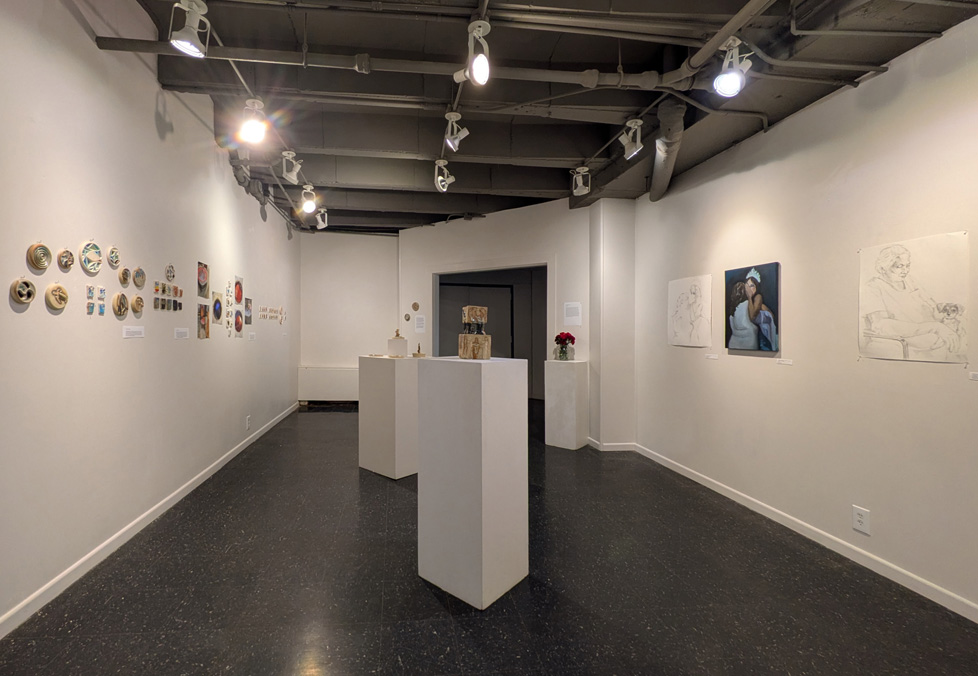 |
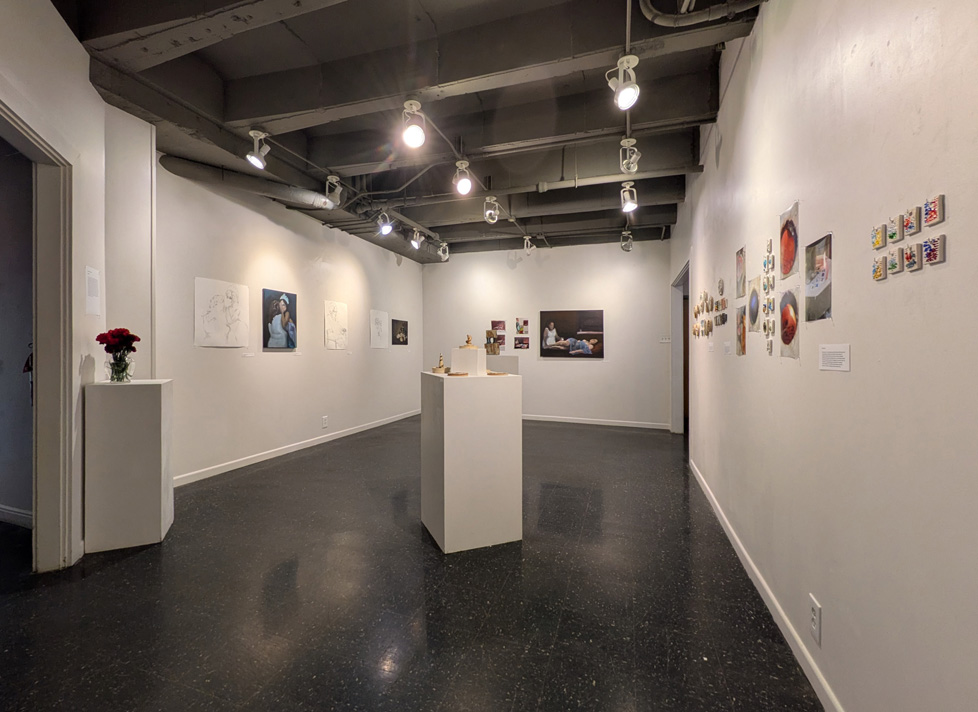
| Te Quiero Tanto, Tanto Megan Dibello This exhibit, Te Quiero Tanto, Tanto, explores the intersection of academic artistic techniques and the rich, vibrant traditions of the Hispanic household. Through reinterpreting academic methods such as chiaroscuro, still-life painting, and symbolic imagery, within the context of contemporary Hispanic life, this exhibition is meant to invite viewers to reconsider the modern political villainization of my culture, notions of family, identity, and heritage especially through a modern lens. Works on display reimagine familiar domestic scenes, incorporating elements of family moments and cultural practices to convey the warmth, complexity, and history embedded within these spaces reflected through studies of famous academic pieces. Through this fusion of Old World techniques and Modern experiences, the exhibit challenges traditional narratives and offers a nuanced portrayal of Hispanic life that is both timeless and ever-evolving. By drawing from Renaissance visual languages, the exhibit honors the enduring legacy of cultural exchange, while also celebrating the uniqueness of of Hispanic cultural expression in the modern world. |
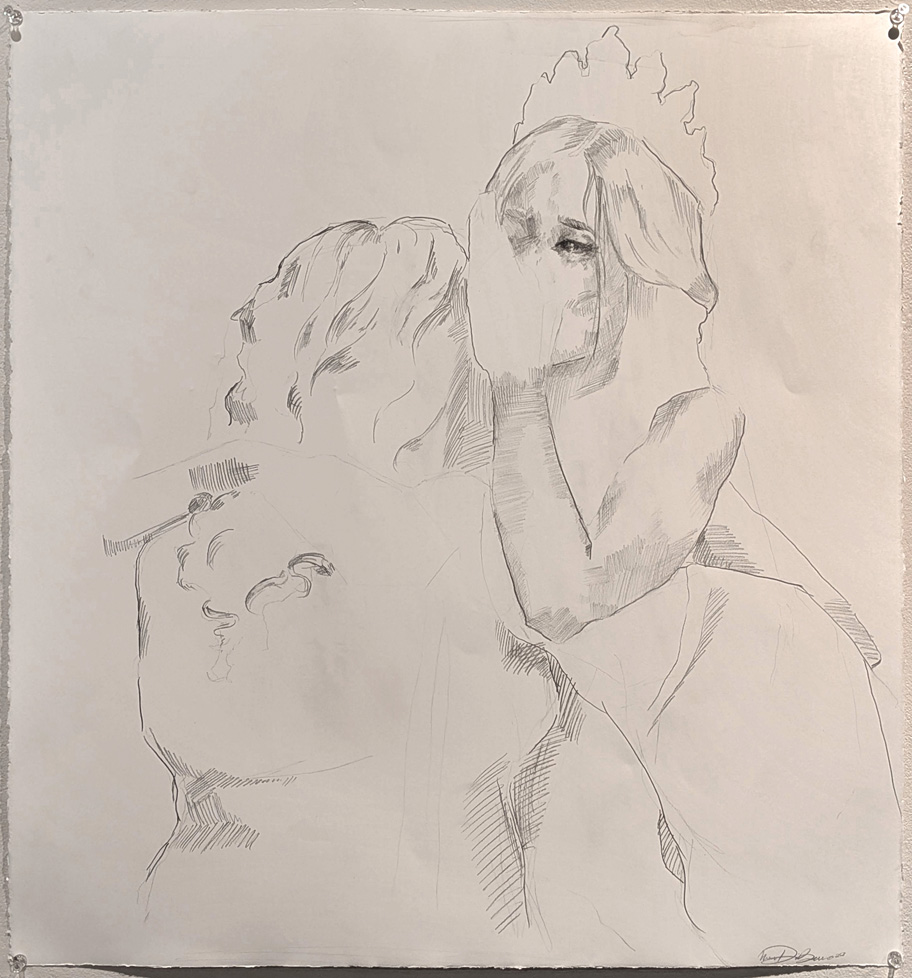 Sketch of "La Danza De Legado" ("The Dance of Legacy") A Portrait of Erika Valdez Graphite on paper Megan Dibello |
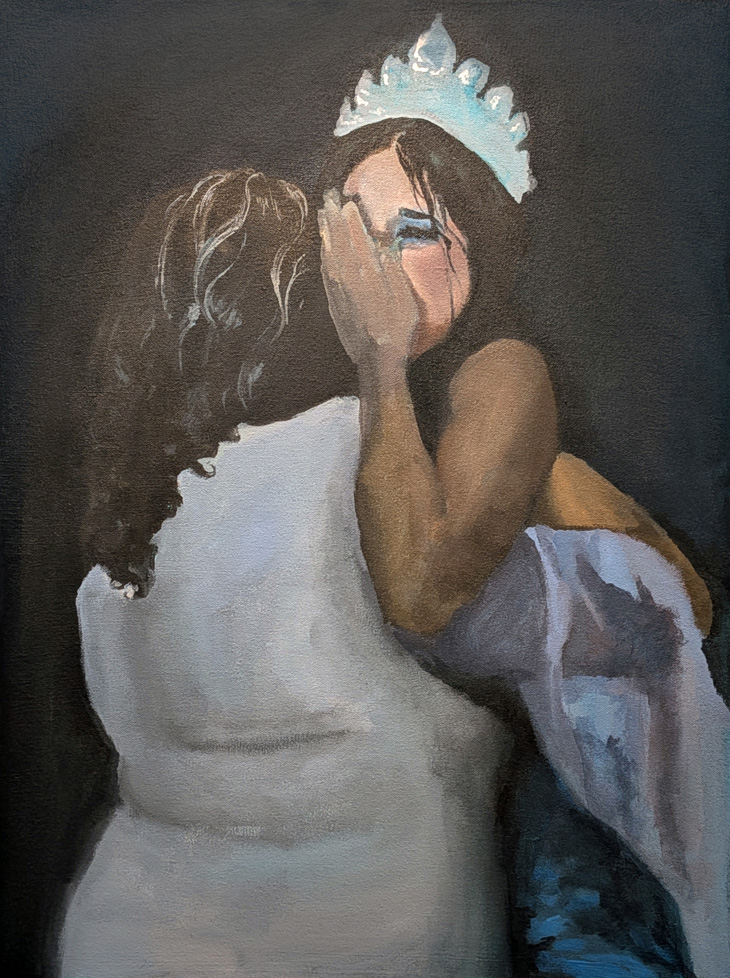 "La Danza De Legado" ("The Dance of Legacy") A Portrait of Erika Valdez Acrylic Megan Dibello |
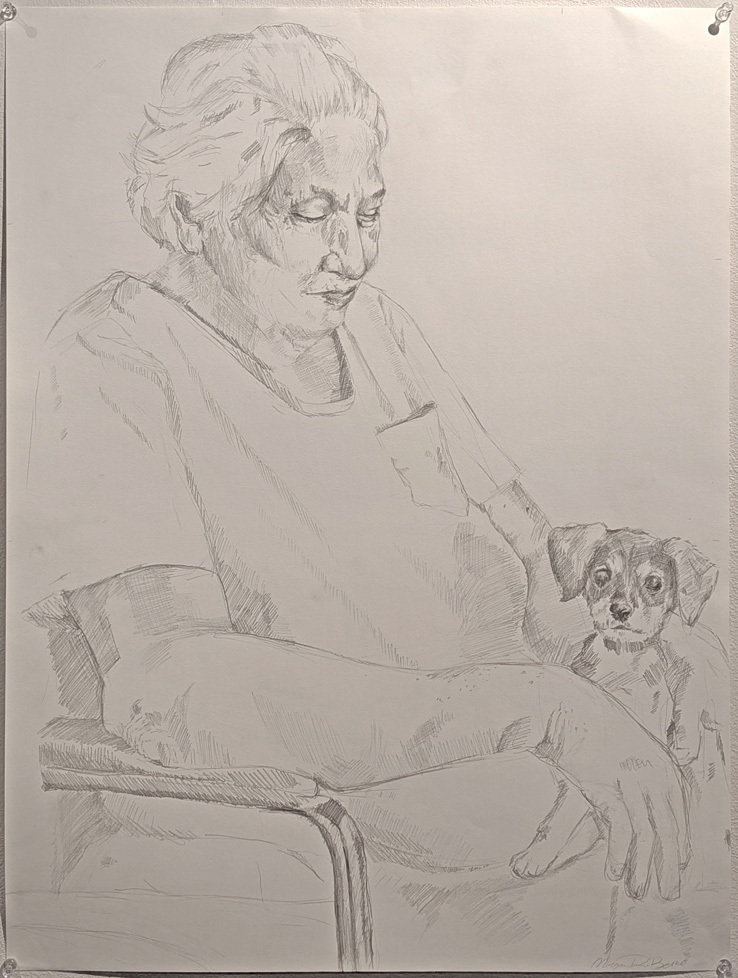 "Te Extraño" ("I miss you") A Sketch of My Abuelita and Paco Graphite on paper Megan Dibello |
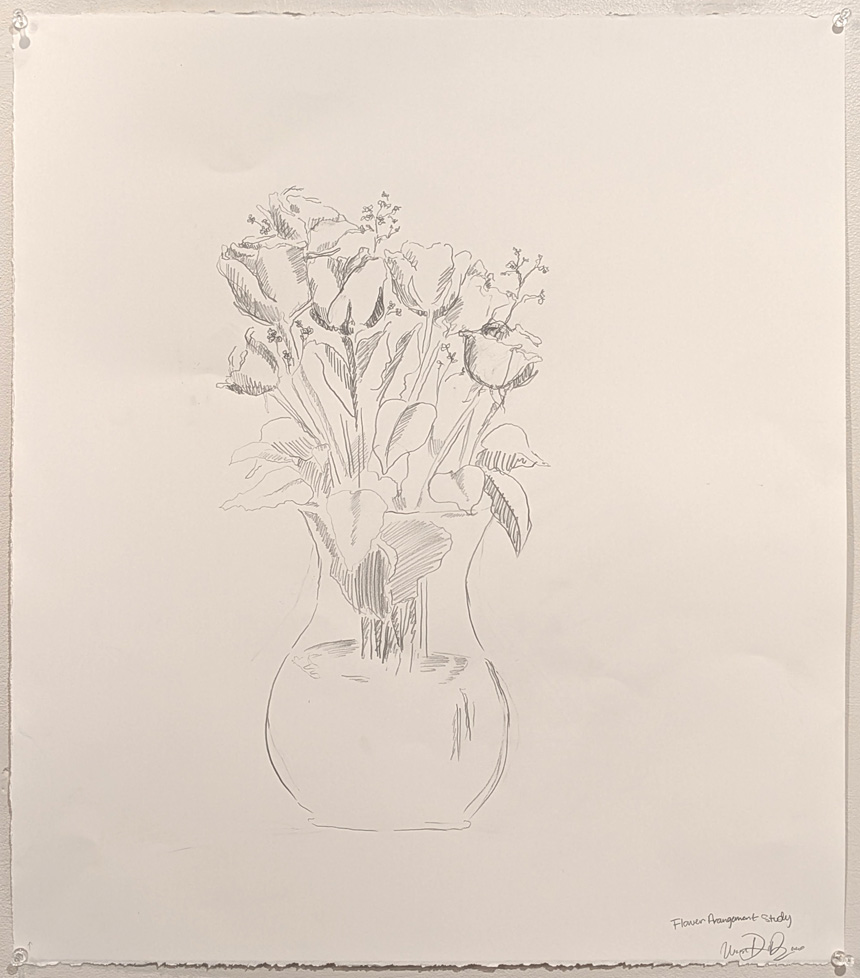 Study of Roses Graphite on paper Megan Dibello |
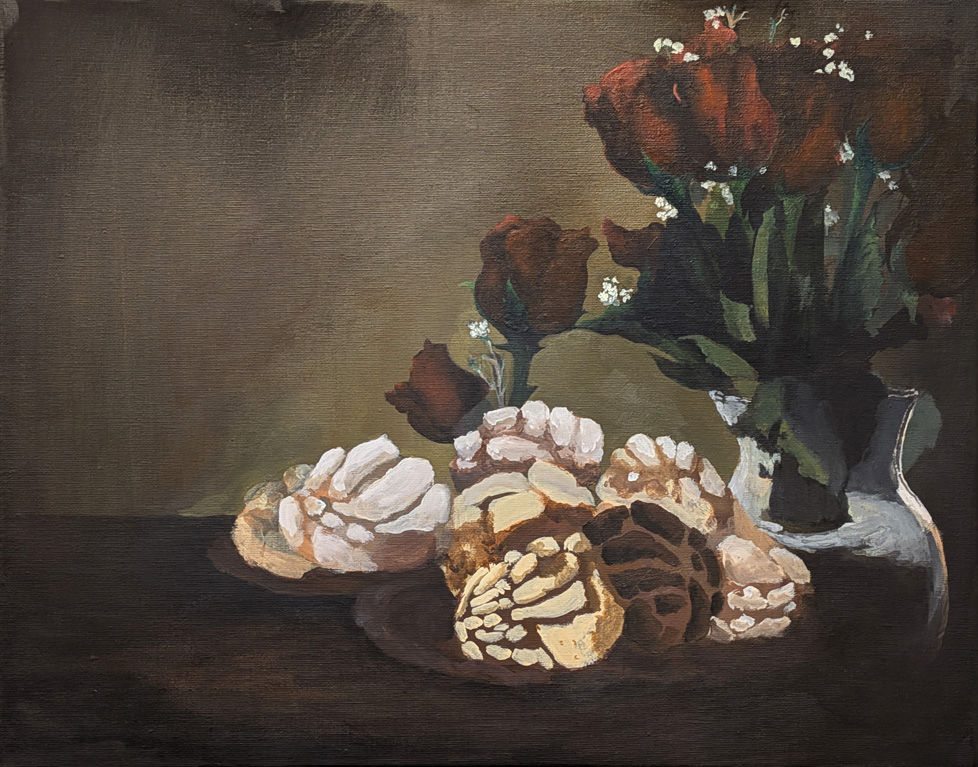 "Dulce Amanecer" ("Sweet Sunrise") Acrylic Megan Dibello |
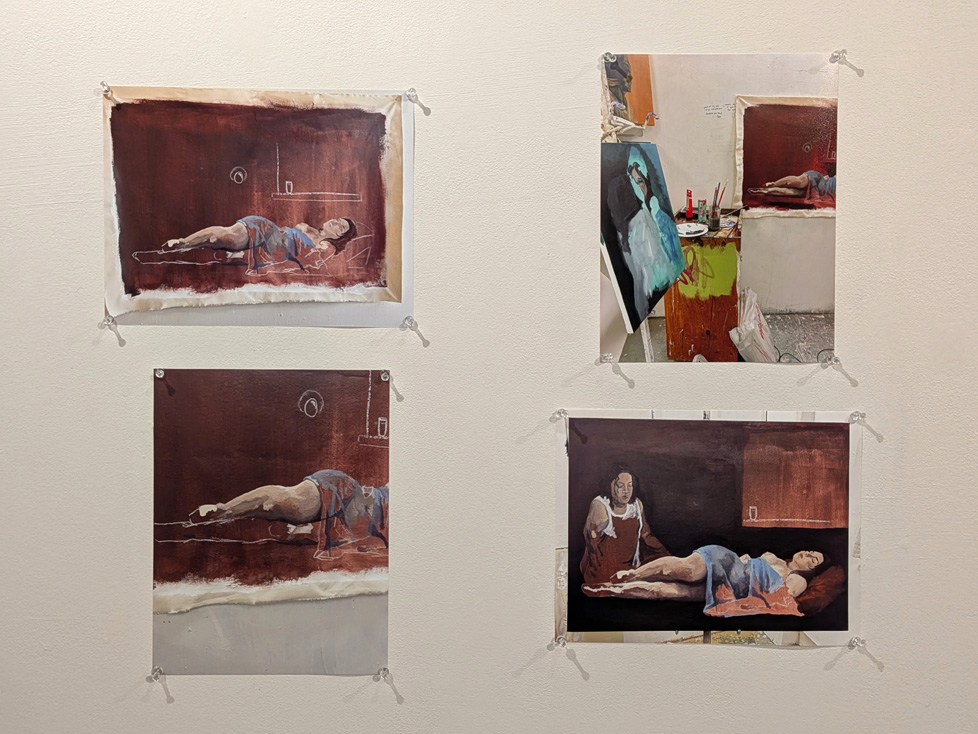 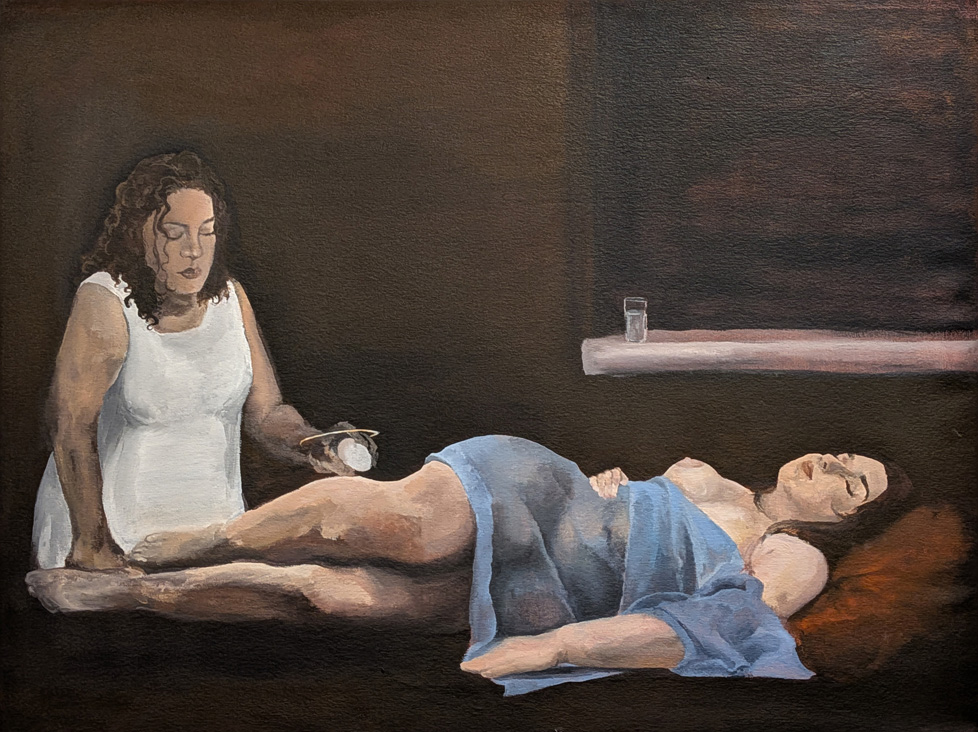 "Gracias Por Curarme" ("Thank You For Healing Me") Acrylic Megan Dibello |
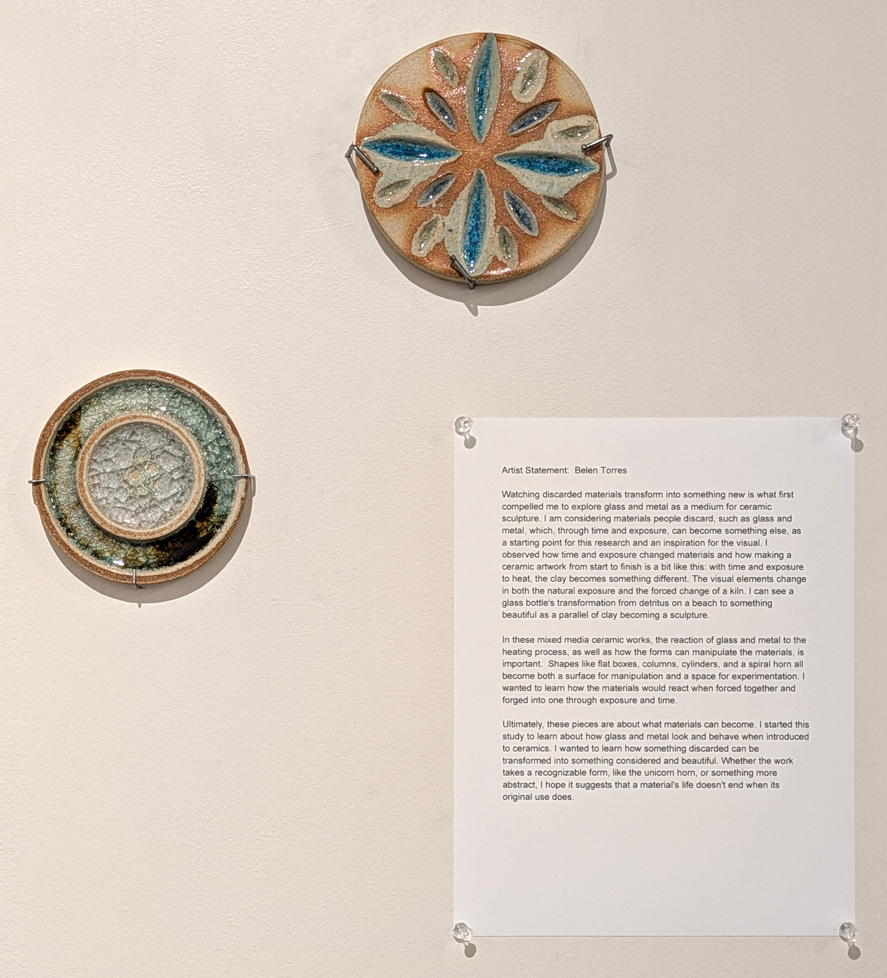
| Artist Statement: Belen Torres Watching discarded materials transform into something new is what first compelled me to explore glass and metal as a medium for ceramic sculpture. I am considering materials people discard, such as glass and metal, which, through time and exposure, can become something else, as a starting point for this research and an inspiration for the visual. I observed how time and exposure changed materials and how making a ceramic artwork from start to finish is a bit like this: with time and exposure to heat, the clay becomes something different. The visual elements change in both the natural exposure and the forced change of a kiln. I can see a glass bottle's transformation from detritus on a beach to something beautiful as a parallel of clay becoming a sculpture. In these mixed media ceramic works, the reaction of glass and metal to the heating process, as well as how the forms can manipulate the materials, is important. Shapes like flat boxes, columns, cylinders, and a spiral horn all become both a surface for manipulation and a space for experimentation. I wanted to learn how the materials would react when forced together and forged into one through exposure and time. Ultimately, these pieces are about what materials can become. I started this study to learn about how glass and metal look and behave when introduced to ceramics. I wanted to learn how something discarded can be transformed into something considered and beautiful. Whether the work takes a recognizable form, like the unicorn horn, or something more abstract, I hope it suggests that a material's life doesn't end when its original use does. |
 |
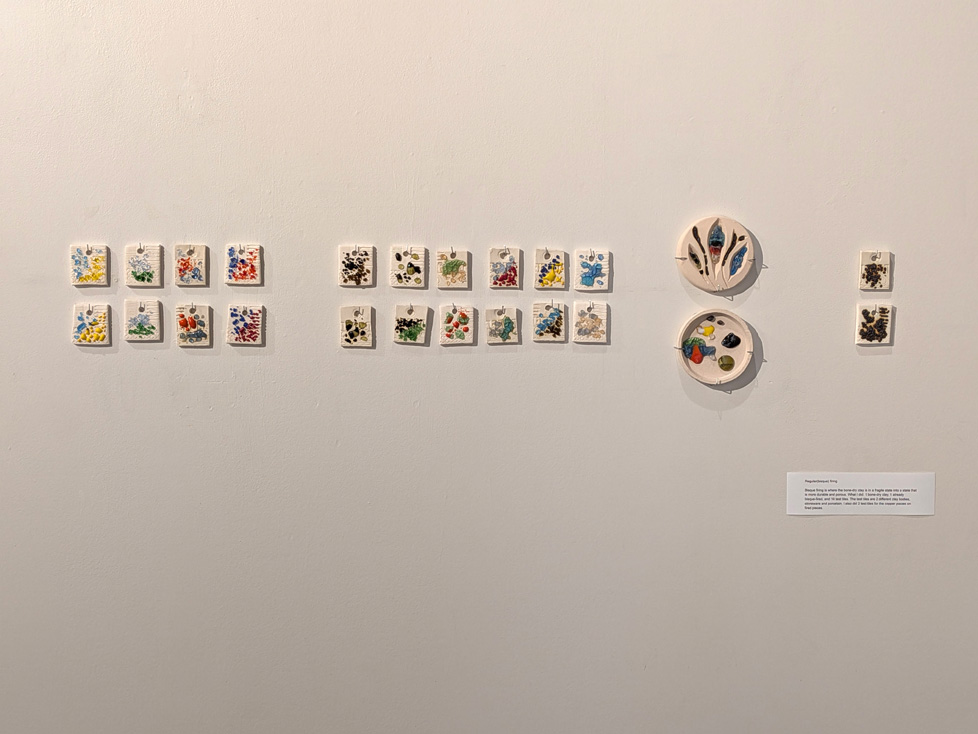 Regular(bisque) firing Bisque firing is where the bone-dry clay is in a fragile state into a state that is more durable and porous. What I did: 1 bone-dry clay, 1 already bisque-fired, and 16 test tiles. The test tiles are 2 different clay bodies, stoneware and porcelain. I also did 2 test tiles for the copper pieces on fired pieces. 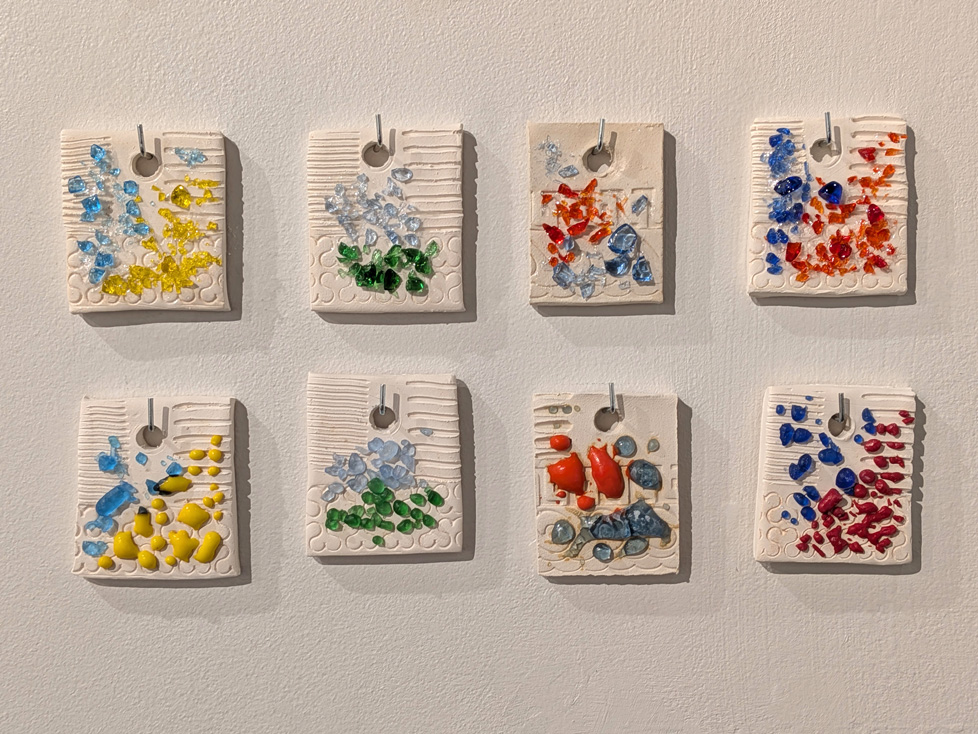 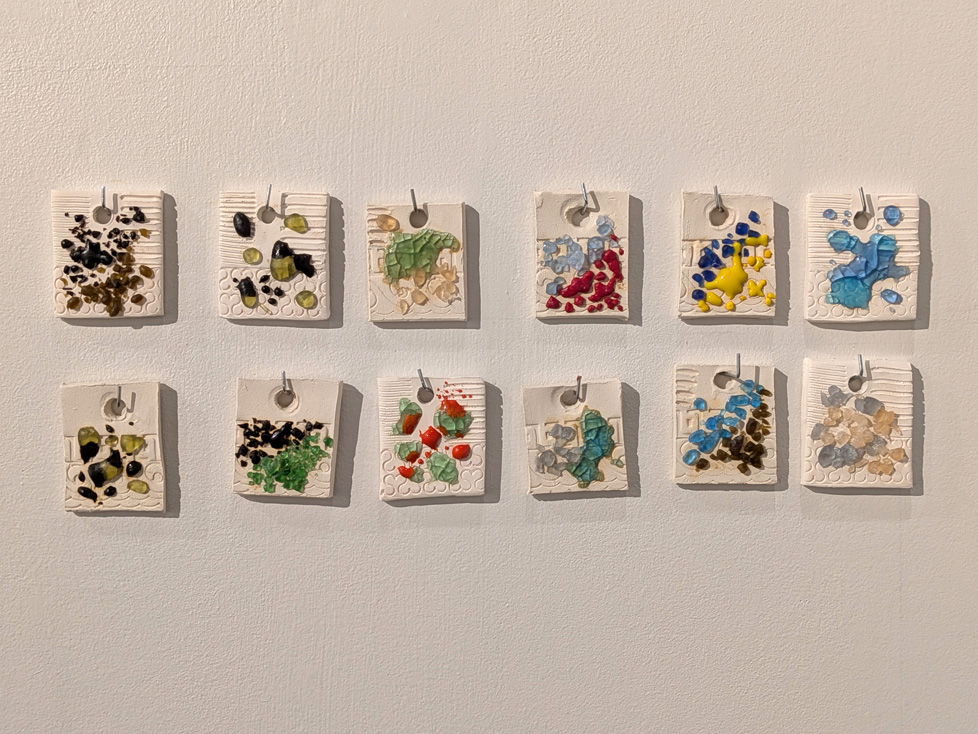 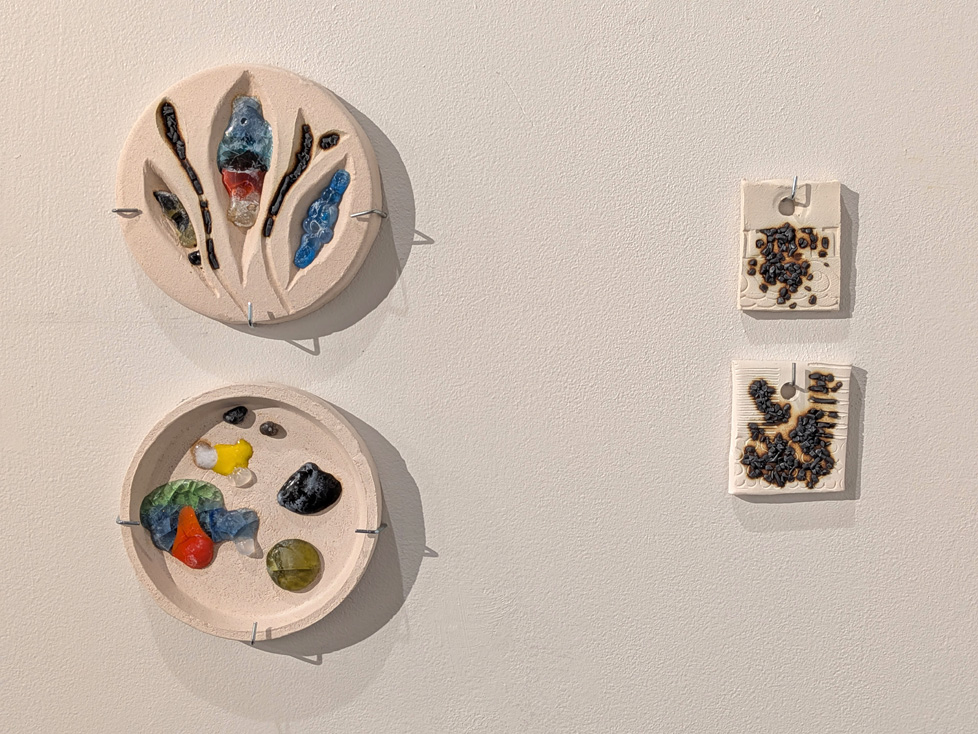 |
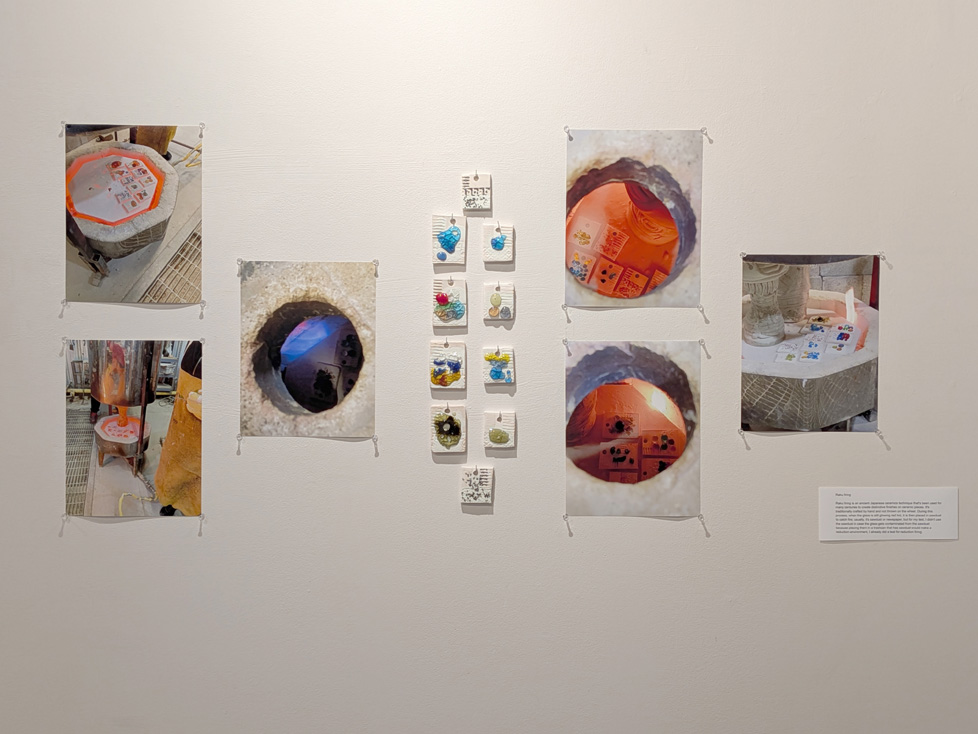 Raku firing Raku firing is an ancient Japanese ceramics technique that's been used for many centuries to create distinctive finishes on ceramic pieces. It's traditionally crafted by hand and not thrown on the wheel. During this process, when the glaze is still glowing red hot, it is then placed in sawdust to catch fire; usually, it's sawdust or newspaper, but for my test, I didn't use the sawdust in case the glass gets contaminated from the sawdust because placing them in a trashcan that has sawdust would make a reduction environment, I already did a test for reduction firing. 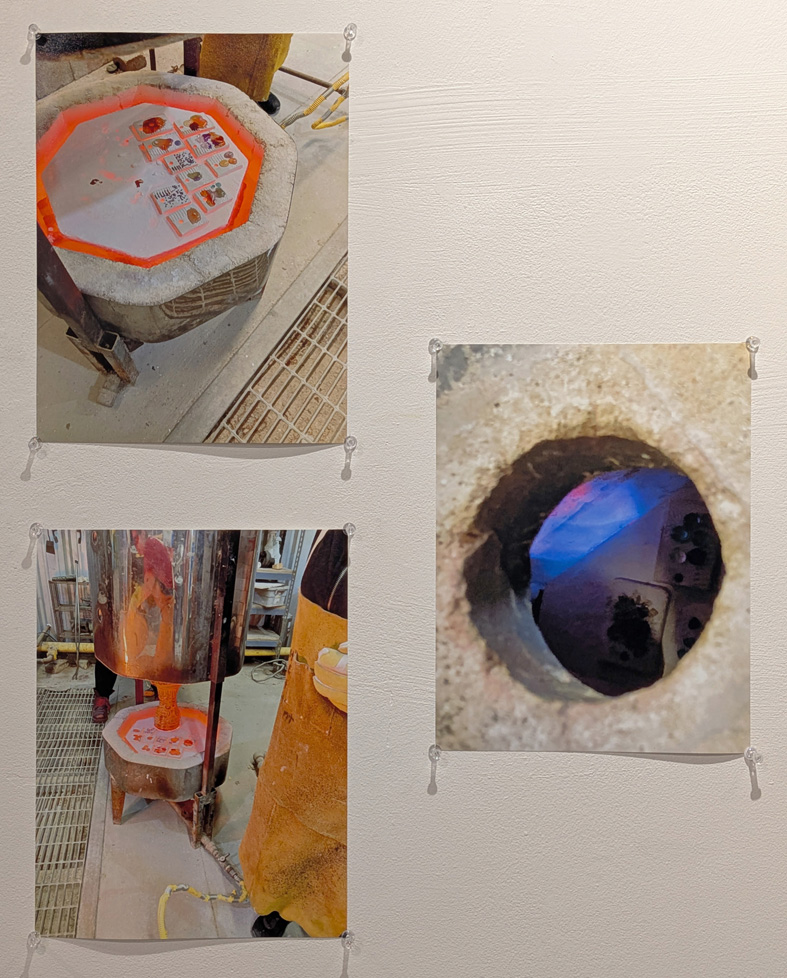 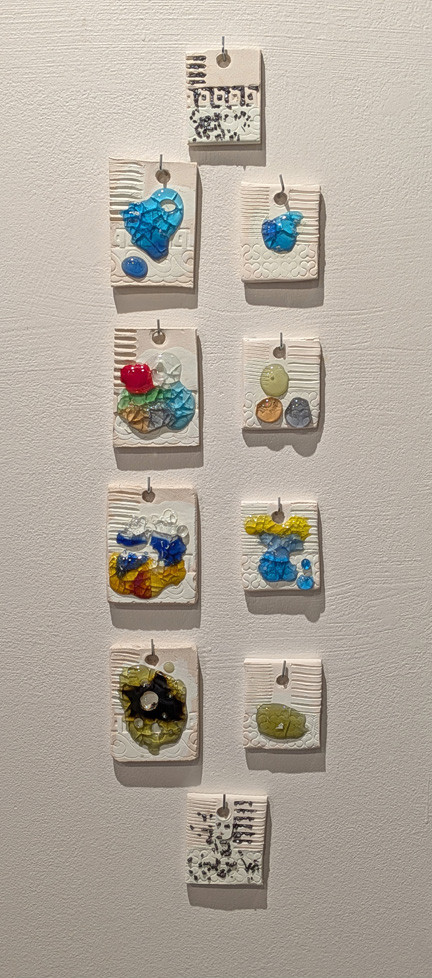 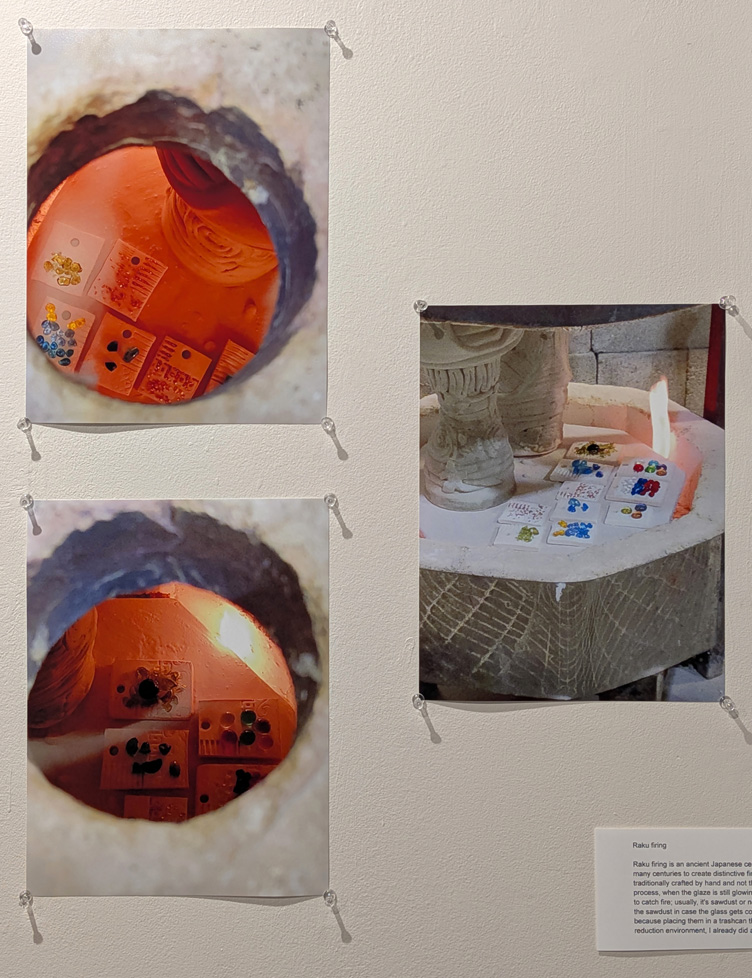 |
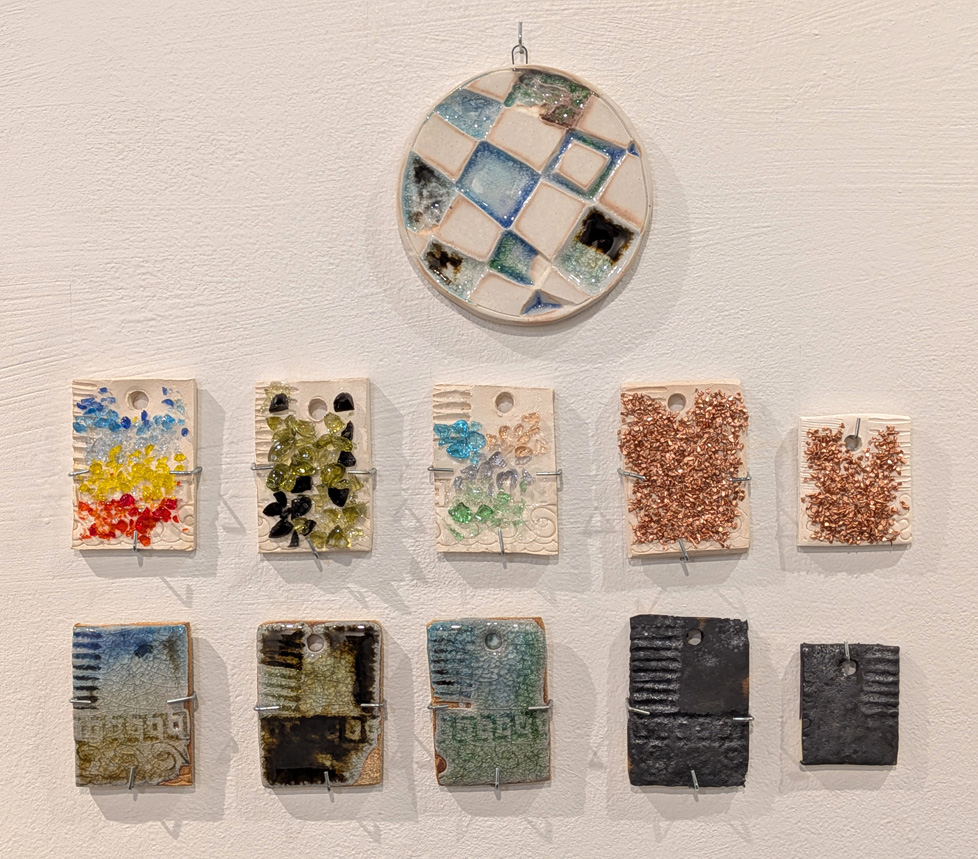 Reduction Firing Reduction firing is where gas kilns increase back pressure or reduce the amount of primary air available to each burner. The result of this is an increase in gases like carbon, hydrogen, and CO. The way you can tell if a ceramic piece went through a reduction firing is by the speckling that the clay body will have, where the glaze or glass wasn't applied to the piece. I did 4 glass test tiles and 2 copper test tiles. I did the same with the other firing, 4 stoneware and 2 porcelain test tiles. |
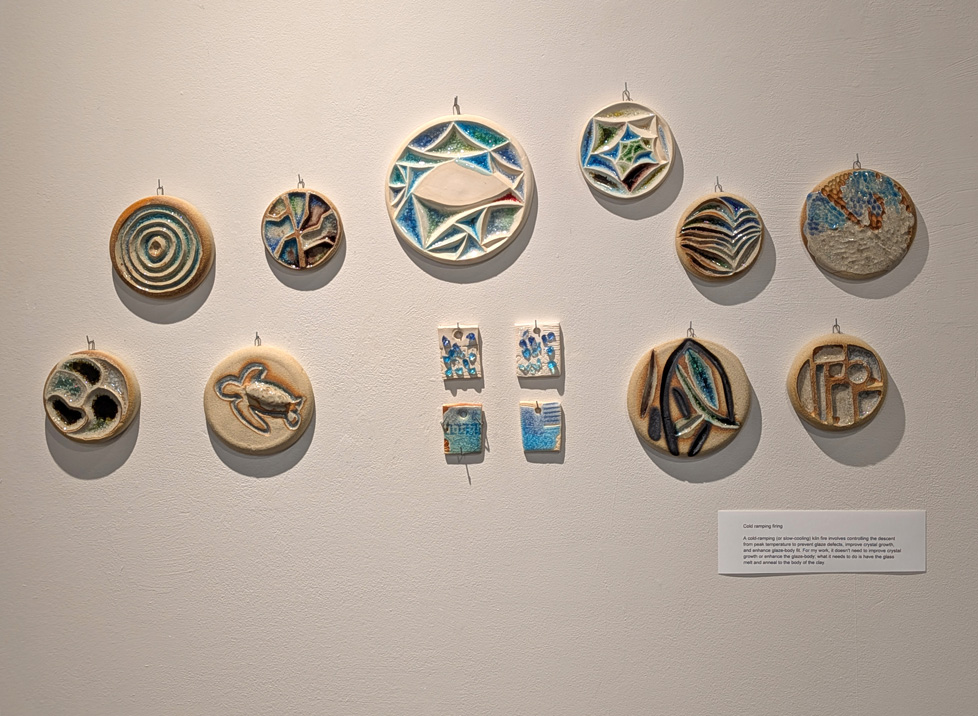 Cold ramping firing A cold-ramping (or slow-cooling) kiln fire involves controlling the descent from peak temperature to prevent glaze defects, improve crystal growth, and enhance glaze-body fit. For my work, it doesn't need to improve crystal growth or enhance the glaze-body; what it needs to do is have the glass melt and anneal to the body of the clay. |
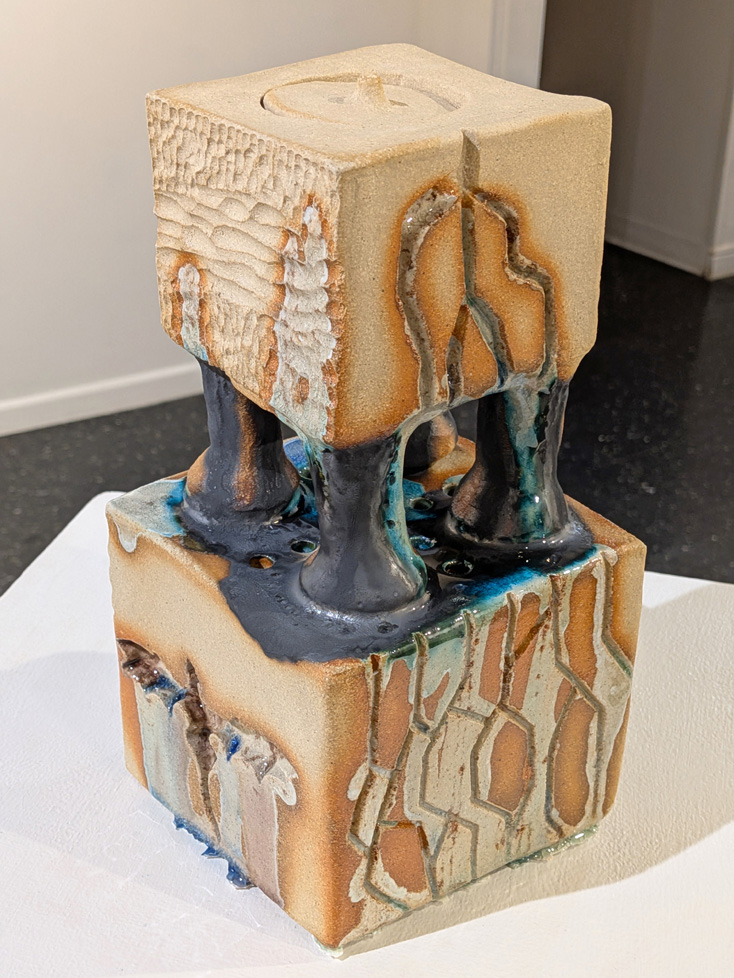 Cold Ramp Firing 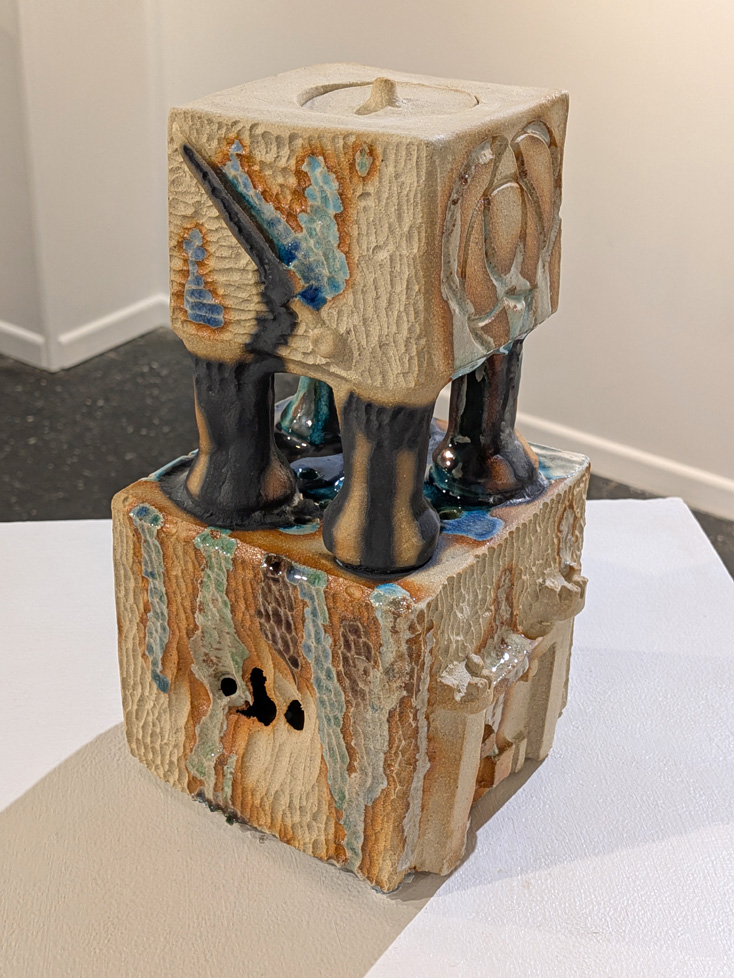 |
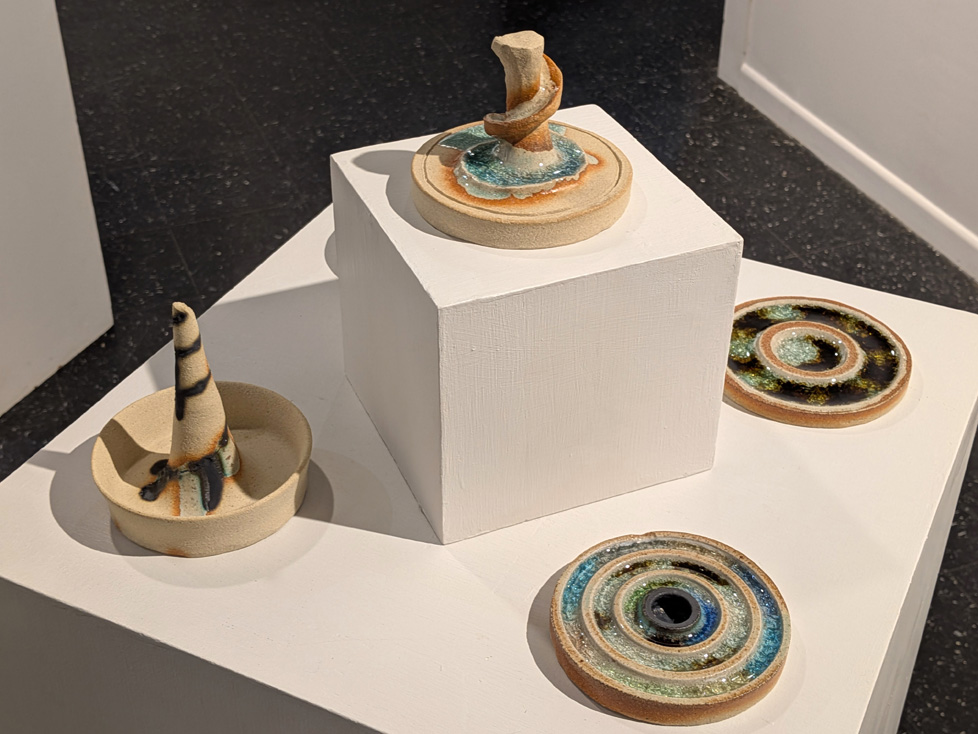 Cold Ramp Firing 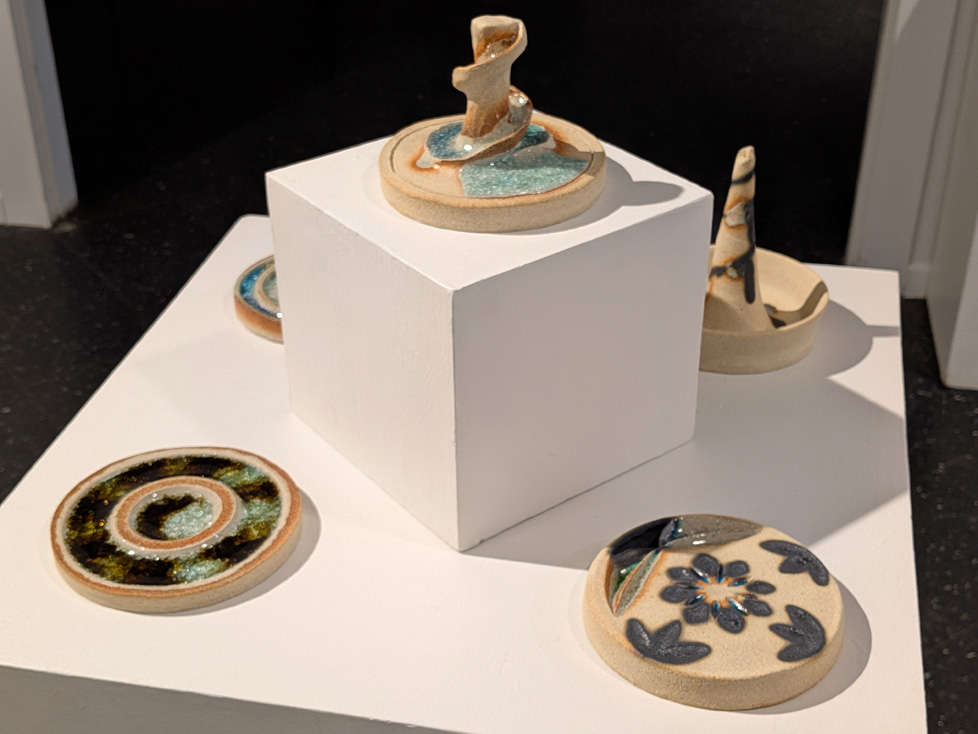 |