logo        Hist 250/350  Spring 2026 

Storms Before the Storm

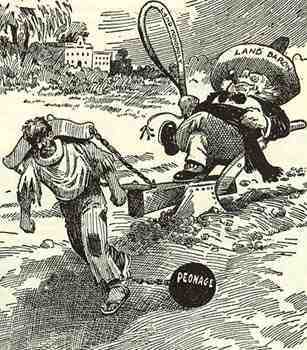
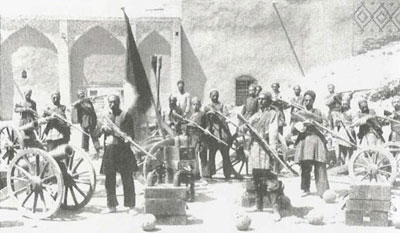
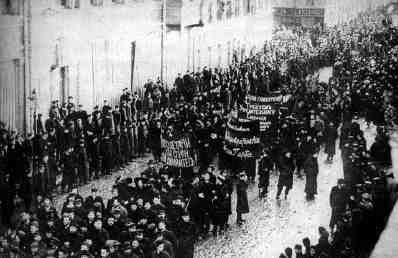
Mexico IranRev Russia 1905
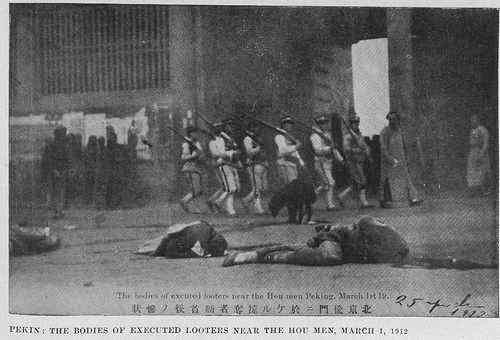
Chinese Revolution

Revolutions Across the World from 1900 to 1916


Instructor, HUNT TOOLEY,  Sherman Hall 108
 
Office hours:
MWF--Noon to 12:30
TTH--4:30 to 5:00

via Zoom only: MWF 2-2:45
https://austincollege.zoom.us/j/84127148219


Class Schedule

Even before the Bolshevik Revolution rearranged the world's political map, a whole series of revolutions had shaken countries on three continents, with significant results for the modern world: Iran 1905, Russia 1905, Ottoman Turkey 1908, Mexico 1910, China 1911, and more. Something like 40% of the earth's 1.7 billion people were directly and immediately impacted by revolutionary changes in laws, governments, regimes, and rules during the ten years before World War I. In this course we will look comparatively (and in a world context) at the causes and consequences of these revolutions. In particular, the activities of imperialist governments and first world "development" bankers will need investigation, since nearly all these revolutions took place simultaneously with imperial pressure for dominance, the acceptance of society-changing loans, "dollar diplomacy," and related financial arrangements. Hence, the course will be in part social history, in part history of the "new imperialism," in part an attempt to understand the financial structure of the pre-World War I world.  This course will count toward the "non-Western" requirement for History majors.

This course meets the requirements for Advanced Writing credit. This course’s AW-related goals include helping students learn important discipline-specific writing skills in History . The course also includes opportunities for students to engage in meaningful revision with feedback from the instructor and peers.

Academic Integrity                            
 
This course will follow the policies on academic integrity laid out in the Environment and other official college publications.  Please read these guidelines carefully; we will follow them strictly.  Academic honesty is absolutely essential.  This means:  no cheating.  If you are ever in doubt as to what constitutes plagiarism, please feel free to come by and discuss the question with me, or any other faculty member for that matter.  We will also be talking about this when we get to the paper assignments.  You can find out more about what constitutes plagiarism at the excellent Plagiarism.org page: "What Is Plagiarism?"
https://www.plagiarism.org/article/what-is-plagiarism


Readings

All class readings are online.

Course Components

There will be a short test--on "events" (objective), a midterm and a final , part of which will deal with questions drawing on material from throughout the course.  The 250s and the 350s have a slightly different set of reads and completely different writings. The exams will also be different for the two groups. Here is the lowdown:

The 250s

Short Obj. Test                    5%
Midterm                              15%
Final                                    20%
Reading Quiz average       15%
3 Papers @15%                 45%
------------------------------------------
                                         100%

The 350s

Short Obj. Test                     5%
Midterm                              15%
Final                                    20%
Reading Quiz average       15%
research proposal               10%
annotated bibliography        15%
research paper                    20 %
revised paper                        (the value of the revisions will be averaged with the original research paper)


EXAM AND PAPER EVALUATION SHEET


GENERAL INSTRUCTIONS FOR ALL PAPERS

You must use proper English and complete sentences.   DO NOT USE INTERNAL CITATION SUCH AS MLA STYLE.  All references, if you use any for this assignment, should be in the footnote/endnote style.  Please see the following site for a complete description of footnote style:

http://www.wisc.edu/writing/Handbook/DocChicago.html
     
(NOTE ON PLAGIARISM:  Plagiarism is so easy with electronic sources, that I want to make clear my stance on it. If you simply rewrite slightly some source you found on the internet (or in print for that matter), that constitutes plagiarism.  If I discover this, you will receive an F for this course, and I will report the case to the Dean and the appropriate conduct organs.  I may not catch all cases of plagiarism, but I promise to give immediate and full attention to those I do.  Give full credit for an idea, for any information that goes beyond common knowledge, for someone's words, for someone's brainchild, etc.  Otherwise you are being dishonest. )
 
Other Important Issues:
    ALWAYS number your pages
    Don't turn in anything to anybody that looks half-baked.
    In quoting, remember to TAG or attribute your quotations in the text:  don't just rely on the footnote to give that information to the reader.
    You can make your writing strongly immediately by revising out all the verbs in the passive voice and most of the uses of the verb to be.  


Hist 350--WRITING ASSIGNMENTS--TBA